
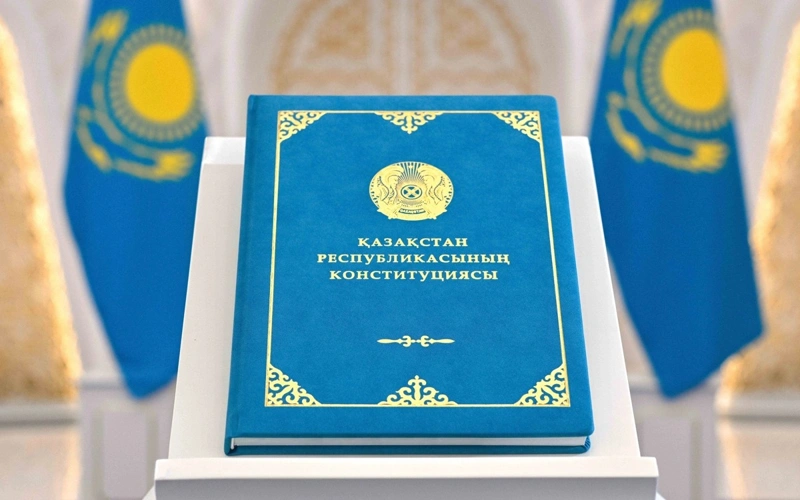
Following the nationwide referendum held on 15 March 2026, the Republic of Kazakhstan adopted a new Constitution aimed at further modernizing the country’s political system and strengthening the effectiveness of public administration. One of the key constitutional innovations was the introduction of the office of Vice President, as stipulated in Article 49 of the new Constitution. The establishment of this institution is intended to ensure continuity, predictability, and stability in the functioning of the highest state authorities, while also enhancing the efficiency of governance.
Optimizing Public Administration and Maintaining Political Balance
The integration of the office of Vice President into the state system allows for a more balanced distribution of administrative responsibilities at the highest level of government. By assigning the Vice President the role of the President’s official representative in relations with the Kurultai (the name of the unicameral parliament of the Republic of Kazakhstan according to the new constitution, which goes into force on 1 July 2026), the Government, and other state bodies, the new framework not only reduces the operational burden on the Head of State, but also improves the responsiveness and efficiency of public administration.
The appointment procedure, under which the Vice President is appointed by the President with the consent of the Kurultai, serves as an important element of the system of checks and balances by reinforcing the role of the legislative branch in state governance. In order to prevent conflicts of interest and ensure full political neutrality, the office is subject to strict restrictions similar to those applied to the President, including a categorical prohibition on holding a parliamentary mandate.
At the same time, the constitutional framework provides for a flexible approach to defining the Vice President’s powers, enabling the Head of State to adapt the responsibilities of the office in accordance with the country’s evolving political, economic, and social priorities.
Comparative Legal Analysis: The Experience of Brazil, South Africa, and Tanzania
In international practice, the institution of the vice presidency operates in different forms, each designed to address specific governance objectives.
Succession and Representation Model (Brazil)
Within the Brazilian model, the Vice President officially assumes the duties of the President in the event of the President’s temporary absence and immediately succeeds to the presidency should the office become vacant. This mechanism ensures continuity in the functioning of state authority and stability during periods of political transition.
In addition to serving as the constitutional successor, the Vice President traditionally performs important representative functions by participating in international events and conducting official visits on behalf of the state.
Coordinating and Executive Model (South Africa)
In South Africa, the Deputy President serves as the principal assistant to the Head of State on executive matters and is constitutionally empowered to act on behalf of the President whenever necessary. This arrangement helps maintain continuity in the functioning of executive authority and government institutions.
The Deputy President also acts as the leader of government business in Parliament, ensuring the implementation of state policies and legislation. The office is responsible for coordinating the delivery of public services, leading key interministerial committees, including those related to land reform, and representing the country in peacekeeping and mediation initiatives.
A practical example of this model can be seen in the work of Paul Mashatile, who has served as Deputy President since March 2023. He actively conducts oversight visits aimed at strengthening the capacity of municipalities and addressing practical challenges related to water supply, electricity, and local infrastructure, while also overseeing issues of economic growth and investment attraction.
Specialized Portfolio and Succession Model (Tanzania)
In Tanzania, the Vice President is elected alongside the President as a running mate and is considered the country’s second-highest political office holder. One of the central constitutional functions of the office is to ensure direct succession by assuming the presidency for the remainder of the term in the event of a vacancy.
In addition, the Vice President acts as the President’s principal assistant on state affairs and oversees matters related to the Union between Tanganyika and Zanzibar. The office also supervises specialized policy portfolios, which frequently include environmental protection, climate change initiatives, and economic advisory functions related to government development projects.
Conclusion
The establishment of the institution of the Vice President represents a carefully considered step toward strengthening Kazakhstan’s system of public administration. International experience demonstrates that such an institution serves not only as a safeguard for continuity of governance during periods of political transition, but also as an effective managerial mechanism capable of improving coordination between the legislative and executive branches and addressing complex socio-economic challenges in a more targeted and efficient manner.