
The first day of the Regional Ecological Summit (RES 2026) has concluded in Astana, setting a focused and forward-looking tone for the discussions ahead. Symbolically launched on International Earth Day, the opening underscored the shared global responsibility to address environmental challenges and highlighted the urgency of coordinated action at both regional and international levels.
Bringing together heads of state, high-level delegations, international organizations, and experts, the summit’s opening day was marked by substantive dialogue on climate resilience, water security, and sustainable development. From the outset, the emphasis was placed not only on acknowledging environmental risks, but on advancing practical and cooperative solutions.
Presidential Address Sets Strategic Direction
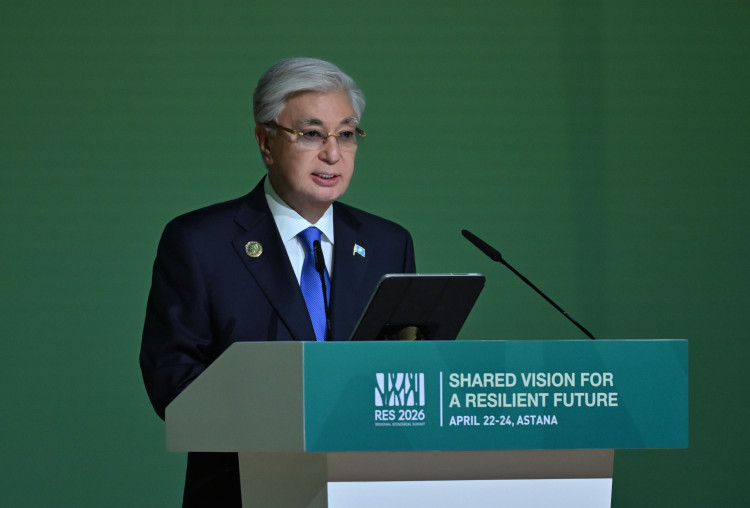
In his address at the plenary session, Kassym-Jomart Tokayev outlined a comprehensive vision for regional environmental cooperation, stressing that ecological challenges are no longer isolated issues, but directly impact economic growth, public health, and long-term stability.
He drew particular attention to the symbolic timing of the summit’s opening on Earth Day, noting that it reflects a unified commitment by participating countries to safeguard the planet. The President highlighted a number of pressing environmental concerns facing the region, including water scarcity, desertification, and the accelerating effects of climate change.
A central message of the address was the need to move from declarations to implementation. Emphasis was placed on strengthening regional coordination, developing long-term mechanisms for cooperation, and ensuring that environmental strategies remain aligned with national development priorities.
The President also reiterated the importance of equitable and rational use of natural resources, identifying water management as a key pillar of sustainable development. In this context, attention was drawn to initiatives aimed at enhancing international cooperation in the water sector.
Focus on Practical Cooperation
Throughout the day, discussions across plenary and thematic sessions reflected a shared understanding that environmental challenges require collective responses. Delegations exchanged views on strengthening climate adaptation measures, improving resource efficiency, and expanding the use of green technologies.
Particular focus was placed on regional approaches to water governance, given its critical importance for Central Asia. Participants highlighted the need for coordinated policies, data-sharing mechanisms, and joint projects to address transboundary environmental issues.
The tone of the discussions remained pragmatic, with a clear emphasis on developing actionable outcomes that can be implemented beyond the summit framework.
Exhibition Highlights Innovation and Solutions
Alongside the official program, heads of state and participants visited exhibition pavilions featuring environmental innovations and sustainable technologies. The displays showcased practical solutions in areas such as renewable energy, water conservation, and environmental monitoring.
The exhibition component complemented the policy discussions by demonstrating how technological advancements can support the transition toward more sustainable economic models.
A Strong Start to Regional Dialogue
The first day of the Regional Ecological Summit concluded with a clear sense of momentum. The alignment with Earth Day reinforced the broader significance of the gathering, while the discussions established a foundation for continued engagement over the coming days.
The opening sessions highlighted a growing recognition among participating countries that environmental issues must be addressed through coordinated, long-term strategies. As the summit progresses, attention will turn to refining these approaches and translating them into concrete regional initiatives.